Textile Literacy · Sustainable Bedding
How to Read Organic Textile Labels: A Coyuchi-Informed Checklist
“Organic” can be a meaningful clue when you’re choosing sheets, towels, or a duvet cover—but it isn’t a complete account of how a textile was made. The word may refer to the fiber, a particular production stage, or a certified finished product. Here’s how to read the details, check the scope, and compare claims without mistaking appealing language for proof.
Published November 12, 2026
Shopping for bedding often begins with a feeling: the crispness of percale, the soft fall of sateen, or the promise of a calmer bedroom made with more considered materials. Then comes the label. Words such as organic, natural, and responsibly made can sound reassuring, but they don’t all mean the same thing—and they don’t automatically describe every step between raw fiber and finished sheet.
The practical question is not simply, “Is this product organic?” It’s “What exactly does the claim cover, who verified it, and can I identify the product or material that was checked?” A useful label makes those answers easier to find. A vague one leaves shoppers doing detective work.
Coyuchi is a familiar reference point for consumers exploring organic bedding and home textiles. Looking at how a brand presents materials can help you build a repeatable method for evaluating any product page, including one from an unfamiliar company. Treat the brand name as a starting point for comparison, not as a substitute for checking the specific item’s current claims, certifications, and documentation.
First, separate the claim from the evidence
A product description is a seller’s explanation; a certification is a defined standard administered by an organization with its own requirements. Those two things can work together, but they are not interchangeable. A description might say that a sheet is made with organic cotton, while a third-party certificate may verify certain stages of processing or environmental and social criteria. The exact scope depends on the standard and the product’s certification status.
That distinction matters because textiles move through a supply chain. Cotton may be grown on one farm, spun into yarn elsewhere, woven or knitted at another facility, dyed or finished at a separate mill, and sewn into a sheet in a different location. A claim about the agricultural origin of a fiber does not necessarily tell you what happened at every later stage.
Think of the label as a small map. The fiber name tells you what material is present; the percentage tells you how much; the standard identifies a set of requirements; and the certification details help you determine which part of the map has been checked. The more precisely these pieces fit together, the easier it is to make an informed decision.
- Fiber claim: What is the textile made from?
- Percentage: Is the named fiber the whole fabric or only part of a blend?
- Standard: Which named certification or specification is being referenced?
- Scope: Does verification apply to the fiber, processing stages, finished product, or another defined part of production?
- Traceability: Is there a certificate number, licensing information, or other detail you can check?
A word shoppers should learn to question: “organic”
On its own, organic is not a full explanation of a textile’s supply chain. Look for language that identifies the material and its share of the finished product: “100% organic cotton,” for example, communicates more about fiber content than “made with organic cotton.” But even a clear fiber statement does not by itself establish that every stage of processing was certified to a particular standard.
There are also important differences between organic agricultural claims and processing standards. A standard may set requirements for how organic fibers are handled through textile production, which facilities are covered, or what environmental and social criteria apply. Another label may focus on chemical testing or product safety rather than verifying that the fiber was grown organically. These standards can serve different purposes; one logo should not be read as a universal seal of sustainability.
When a label uses an abbreviation, take a moment to find the standard’s full name and the organization responsible for it. Then read what the standard actually covers. If the product page says “certified,” check whether the wording names the certificate or standard, and whether the claim is tied clearly to the exact product you’re considering.
Certifications and rules can change. For a purchase you’re considering now, use the brand’s current product page and, where available, the certifier’s own public information. An older article, a general brand statement, or a logo pictured elsewhere on a site may not tell you the current status of a particular color, size, collection, or production run.
The checklist: read the label in seven passes
1. Find the exact fiber composition
Start with the material line, not the headline. Look for the full composition and percentages: 100% cotton, a cotton-linen blend, silk with a different-fiber filling, or another combination. If an item has several components—such as a coverlet with a face fabric, reverse, and filling—check each one separately. The outer fabric’s claim may not describe the whole item.
2. Look for the word that describes the fiber, not just the mood
Descriptions such as “earthy,” “natural,” “clean,” and “conscious” can convey a brand’s aesthetic or values, but they are not precise fiber specifications. For an organic cotton claim, look for explicit language about organic cotton and then ask whether a named standard or verification backs it up. “Natural cotton” is not automatically the same claim.
3. Identify the named standard
A recognizable, named standard gives you something concrete to investigate. The label should make clear which certification or testing scheme is being invoked rather than relying on a generic phrase such as “certified safe.” Learn what the standard is designed to assess: fiber sourcing, processing, chemical restrictions, social criteria, or a combination of requirements.
For example, GOTS is a textile-processing standard associated with organic fibers and requirements across defined production stages. OEKO-TEX STANDARD 100 is a product-testing label focused on harmful substances in tested textile components. They address different questions. Neither name should be treated as shorthand for every possible environmental, labor, or health benefit.
4. Check what the certification covers
Scope is where a careful shopper earns their confidence. Does the statement refer to the fiber, the processing chain, the finished article, or a particular component? Does it apply to this specific bedding item, or is it a general statement about a brand or collection? If the product page does not say, look for the standard’s public scope information or ask the brand to clarify.
A certified input can be meaningful, but it is not identical to a certified finished textile. Conversely, a finished-product certification may focus on a different set of criteria from organic farming. Read the statement closely rather than assuming that one certification answers every question you might have about sourcing and manufacturing.
5. Look for a way to verify the claim
Useful supporting details may include a certificate number, the name of the certifier, a scope document, or a clear explanation of what facilities and products are covered. If the brand gives a certification name but no product-level detail, don’t automatically assume the claim is false; simply recognize that the page has not yet given you the full picture. You can look for a verification directory or contact customer service with a specific question.
6. Read the rest of the product specifications
Certification is one part of product literacy, not the entire purchase decision. Check whether the material details are complete, what the weave or construction is, where the product is made if that information is supplied, and what care it requires. A sheet set’s fiber content and percale or sateen weave tell you different things: composition describes the fiber; weave describes how yarns are arranged and affects the fabric’s feel and appearance.
Care guidance is especially useful when thinking about longevity. A textile that can be washed in a way that fits your household routine may be easier to maintain over time. Follow the maker’s instructions, and avoid assuming that a natural or organic fiber needs no special care.
7. Notice what is missing—and ask a focused question
If the page says “organic” but does not identify the fiber percentage or standard, ask what is certified. If the certification is named but the product’s scope is unclear, ask whether it applies to the specific item and which components or production stages it covers. A concise, answerable question is more useful than a broad request for proof that a company is “sustainable.”
Using Coyuchi as a reference point—not a shortcut
For shoppers already comparing sustainable sheets, Coyuchi can serve as a familiar example of a brand to examine. The same checklist applies whether you are browsing its site or comparing it with another bedding maker: open the page for the exact product, locate the full fiber disclosure, identify any named certification, and confirm the stated scope. Then check care instructions and any available sourcing or manufacturing information.
It’s worth repeating: a brand’s overall identity does not automatically establish the certification status of each product. Collections can differ in material, construction, origin, and verification. Product information can also change. So, instead of relying on a general impression of a company, assess the individual item and the wording attached to it.
A strong product description makes that assessment pleasant rather than exhausting. It tells you whether the fabric is, for instance, 100% of a named fiber or a blend; identifies the weave where relevant; names a certification accurately; and explains the limits of that claim. When you encounter a vague sentence, pause before turning it into a broader conclusion than the words support.
The aim is not to find a perfect label or to demand that every product page become a technical manual. It is to be able to distinguish a material fact from a general promise—and to understand what evidence is available for the promise.
A bedding example: fiber content is not the same as organic certification
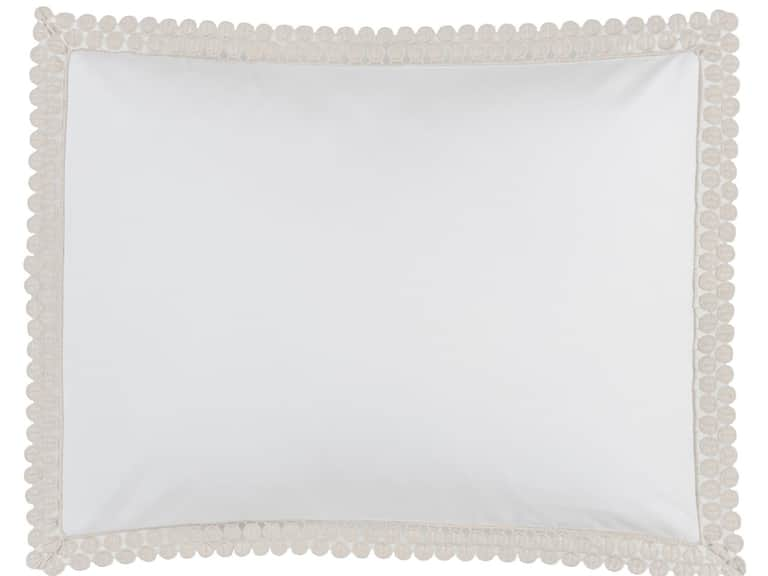
Consider BOVI Magnolia pillowcases and shams as an example of why careful wording matters. The product information describes the pieces as 100% cotton percale, with a 200 thread count, and gives practical details about the weave and care. Those are useful, specific material and construction disclosures. They help a shopper understand what the textile is and how it is presented.
But a statement that an item is made from 100% cotton is not, by itself, a statement that the cotton is organic. Nor does it establish a particular textile certification. This distinction does not make the product better or worse; it simply shows why shoppers should read the exact claim rather than supplying a certification that the label has not stated.
If you’re comparing cotton bedding, put the specifications side by side. Is the fiber organic or conventional? Is a percentage provided? Is a third-party standard named? Does the information specify the product’s scope? Does the care guidance suit your needs? This makes it easier to compare like with like, instead of letting a polished description or a familiar brand name decide the question for you.
Read the BOVI Magnolia pillowcases and shams product details as one example of a listing that spells out cotton composition, percale construction, and care information.
What a label can’t tell you on its own
Certifications are valuable tools, but they are not an all-purpose verdict on a textile. A certification may address particular criteria while leaving other questions outside its scope. It may not tell you whether a product suits your preferred sleeping temperature, how long it will last in your home, or whether you will enjoy its feel. And a certification does not eliminate the need to read the full material disclosure.
Nor does “organic” automatically mean that a product has a lower impact in every respect. Environmental impact is shaped by a range of factors, including cultivation, processing, dyeing and finishing, manufacturing, transport, use, and end-of-life disposal. A responsible label-reading habit avoids turning one attribute into a sweeping promise about the whole product’s footprint.
Durability and care belong in the picture, too. A fabric’s likely lifespan depends on its construction and use, as well as how it is washed, dried, stored, and repaired. Buying fewer, well-used textiles can be part of a thoughtful approach, but no single fiber or certification guarantees that outcome for every household.
Quick reference: questions to ask before you decide
- What is each part of the product made from?
- Does the product say “organic” clearly, and does it give a fiber percentage?
- Which named certification or standard supports the claim?
- What does that standard assess—and what does it not claim to assess?
- Does verification apply to the fiber, a production stage, the finished item, or a specified component?
- Can I find a certificate number, certifier, or other way to check the claim?
- Are origin, weave, construction, and care details available?
- Would a brief question to the brand resolve an important uncertainty?
The calmest way to shop for sustainable sheets
Reading textile labels doesn’t have to turn a bedding purchase into a research project. Start with the fiber composition, look for a named standard, and check what the standard covers. Then weigh the practical details—feel, construction, care, and durability—against your own priorities. If the label leaves an important point unclear, ask a specific question or compare it with a product whose disclosures are more complete.
Coyuchi may be a useful familiar reference as you learn the language of organic bedding, but the best habit is brand-neutral: evaluate the exact product in front of you. A clear organic textile label should make it possible to tell what the claim means and where its boundaries are. That little bit of precision helps transform a comforting word into information you can actually use.
The bottom line
A single word can’t tell the whole story of a sheet. Look for the fiber, the percentage, the named standard, and the certification’s scope. Check product-specific details rather than assuming every item from a brand shares the same status. With that checklist in hand, you can compare organic textile labels more confidently—and choose bedding for the qualities that matter most to you.